
To what extent, if any, did the costs of the British Empire (1846-1914) outweigh its benefits?
By Aiyla Iqbal
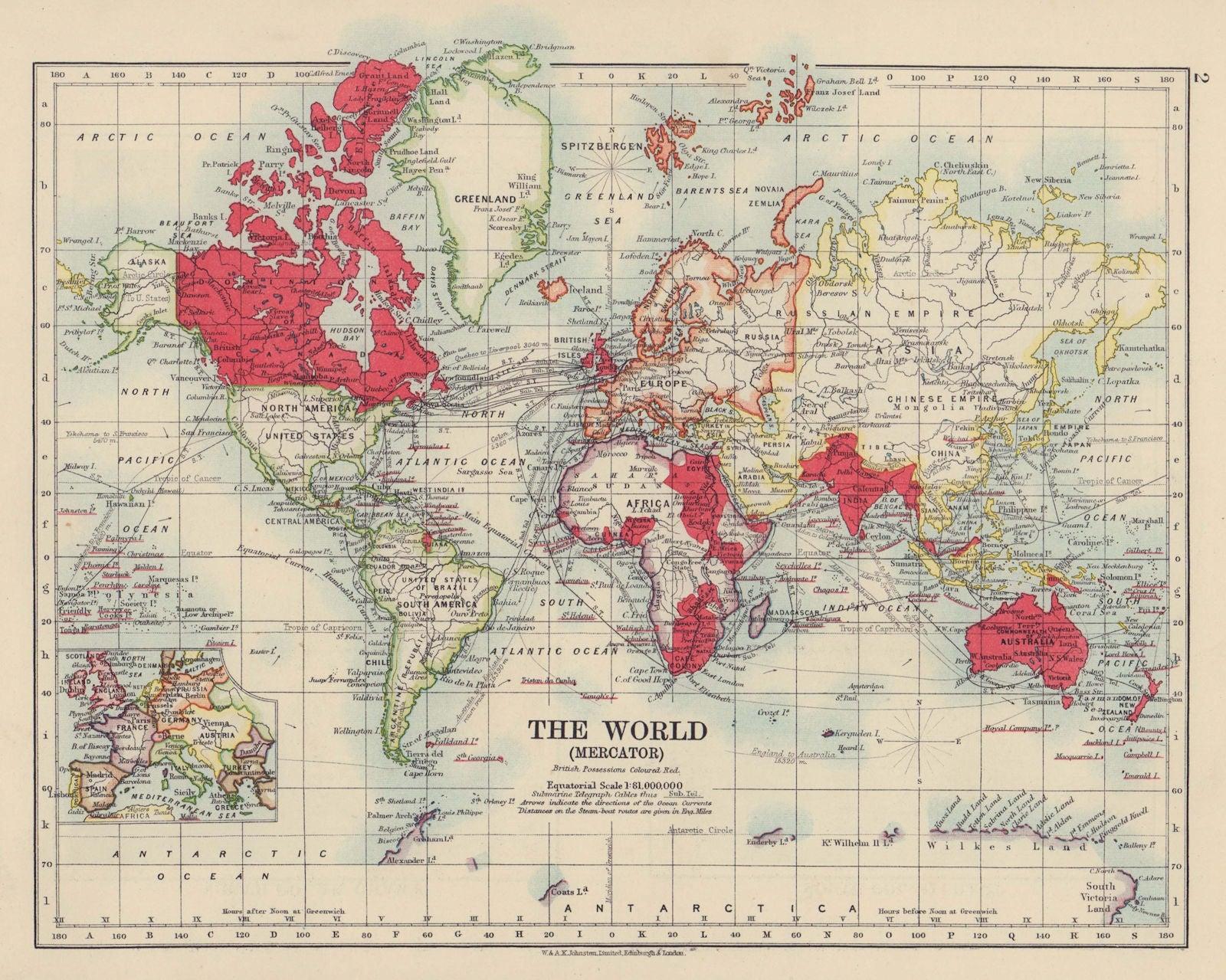
Introduction
Between 1846 and 1914, Britain presided over the largest empire in the world, governing roughly a quarter of the global population and territory. During this era of ‘New Imperialism’, following the era of ‘Mercantilism’, overseas expansion became increasingly formalised, with territorial control and administrative authority replacing earlier reliance on informal economic influence. For many contemporaries, the empire was central to Britain’s prosperity, providing protected markets, access to raw materials, and strategic security for global trade. Yet, the assumption that territorial control was necessary for economic supremacy remains deeply contested.
However, economic historians increasingly questioned whether imperial expansion was materially beneficial to Britain itself. Critics such as J.A. Hobson argued that imperialism primarily served financial elites rather than the wider economy, specifically, the working classes, while more recent scholars, including Patrick K. O'Brien suggested that economic gains from the empire were marginal and could have been achieved through free trade. At the same time, the empire imposed significant fiscal and strategic burdens, from rising defence expenditure to the diversion of capital away from domestic industry.
This dissertation assesses the extent to which the costs of the British Empire between 1846 and 1914 outweighed its economic benefits to Britain. It argues that although imperialism delivered targeted advantages to financial and strategic interests, the broader economic consequences, including military overextension, distorted investment patterns, and complacency in industrial modernisation, weakened Britain’s long-term competitiveness on the eve of the First World War. In aggregate macroeconomic terms, the empire redistributed income toward financial and strategic elites but did not constitute a decisive engine of national growth.
Main body/discussion
The benefits of the British Empire
Although many of the empire’s benefits were concentrated amongst elite investors and strategic planners (O’Brien, 1988), they nonetheless played a significant role in sustaining Britain’s international influence during an era of intensifying global competition. One of the principal arguments in favour of British Imperialism was its perceived ability to secure overseas markets and investment opportunities, thereby reinforcing Britain’s position as the world’s leading financial power.
O’Brien and other historians do not deny that the British Empire provided some economic advantages, particularly in terms of capital investment opportunities, strategic routes, and prestige-based access to foreign markets (however, O’Brien consistently argues that these benefits were overstated by imperial apologists and disproportionately enjoyed by elite groups). In terms of trade access, the empire evidently allowed Britain to secure access to certain colonial markets, especially in Asia and Africa. Yet, there is a difference between the supply chain in this case, and Britain’s trade of financial goods. For instance, the supply chain provided businesses with resources like cotton, tea, and rubber to support manufacturing and trade by involving the extraction, production, and shipping of goods and raw materials from the colonies to Britain. The sale of financial products, on the other hand, featured British investors making money off of foreign assets like insurance, railroads, and colonial bonds; these profits were made through financial markets as opposed to actual trade. Britain gained from both: financial goods enabled its elite to profit from imperial investments, frequently at lower risk, while the supply chain supported its industrial economy. However, it is argued that Britain’s most valuable trade occurred with non-colonial countries, such as the USA and nations within Europe. “British trade with independent countries was greater in quantity and more than double in value than trade with its own colonies,” (O’Brien, 1988). This point is reinforced by the fact that trade with the empire in 1860 was 30%, whilst with the rest of the world it was 70%, and in 1913 it was 37%, whilst it was 63% with the rest of the world (Cain & Hopkins, 2002). The persistence of a majority of trade with non-imperial partners suggests that Britain’s commercial supremacy depended more upon competitive industrial production and naval protection of open markets than upon formal territorial control. Empire was not a necessity for commercial success, Britain could (and did) trade profitably with nations it did not govern. Moreover, in relation to overseas investment, O’Brien acknowledges that the empire facilitated capital exports, allowing British investors to lead and profit from infrastructure projects like railways and ports. However, he mentions that these flows often yielded low returns, and that private investors (not the national economy) benefited most. This can be seen when he asserts, “the imperial framework did little to ensure high rates of return for the economy as a whole…profits were heavily concentrated among a narrow set of elite investors,” (O’Brien, 1988). The empire was also seen to bolster Britain’s geopolitical status and naval dominance. Yet, these can be treated as intangible or symbolic benefits, valuable mainly to elite political circles rather than the wider population.
Therefore, O’Brien therefore provides the view that whilst the empire offered a range of potential benefits to Britain, particularly in terms of trade access, capital investment opportunities, and naval power projection, it did not deliver sufficient economic returns to justify its costs.
Additional benefits are implicitly discussed in Julian Go’s article, “Capital, Containment, and Competition: The Dynamics of British Imperialism, 1730-1939.” The economic gains through trade expansion were discussed, “states take new territory because it helps increase trade…which might help capitalists, but the new trade is taxable or might spur economic growth,” (Go, 2014). It is suggested that imperialism was instrumental in expanding markets and securing trade, especially in periods of intense global economic competition, hence, benefiting the British economy. Within this discussion, it is also argued that imperialism generated taxable economic activity abroad, which benefited the British state by increasing revenue. “In benefiting capitalists through imperialism, state rulers can benefit themselves,” (Go, 2014). It is implied that this revenue helped sustain military spending and public finances, especially when domestic sources were under strain, hence proving to be beneficial for the British.
Furthermore, the empire served as a defensive network which provided strategic bases to protect trade routes and deter rivals, therefore providing geopolitical and military security. Go states that, “colonies can help protect state borders and serve as nodal points in a military defense network.” An instance of this is Britain’s acquisition of islands in the Caribbean and Pacific as they were often motivated by their naval or strategic utility. Plus, by annexing territories, Britain often prevented economic or military expansion by France, Germany, or the U.S., which reinforced its global dominance during a period of greater global competition. “Taking colonies would provide added security to British interests by providing territorial bulwarks against other states,” (Go, 2014). Thus, the British Empire benefited greatly from these strategically located areas, which served as centers for trade, resource extraction, and military deployments, ultimately enhancing the Empire's standing internationally.
Hence, it is clear that imperial expansion gave Britain significant material and strategic advantages during times of increased global competition by securing trade access, generating revenue, and reinforcing global military dominance, even though Go's analysis frames these benefits as largely dependent upon Britain's response to external threats.
Following this, further benefits are discussed within a report published by a free-market think tank (IEA), which aims to reevaluate the legacy of Western colonialism from an alternative utilitarian (as well as quantitative and economic) perspective. The report is largely a response to what the author (Institute of Economic Affairs, 2024) perceives as an ideological bias in contemporary academic discourse, which emphasises the harms of empire whilst neglecting any potential benefits. Therefore, the report is explicitly revisionist, and the cost-benefit analysis reflects neoclassical economics rather than postcolonial or moral analyses.
Furthermore, the report argues that British Imperialism (included under the discussion of Western colonialism), brought a myriad of measurable and long-term benefits, particularly to former colonies and many of these arguments apply to Britain either directly or implicitly. The report claims that British colonial rule established property rights, legal codes, and bureaucratic institutions that supported long-term economic growth in many colonies, for instance, “British colonies tended to receive stronger institutional endowments than those of other empires,” (Institute of Economic Affairs, 2024). Moreover, it claims that, “colonial governments built infrastructure that would have otherwise taken decades to emerge endogenously in many places,” (Institute of Economic Affairs, 2024), hence, implying that colonial powers (especially Britain) built railways, ports, telegraphs, and roads, which laid the foundations for future industrial development, therefore, proving to be beneficial for the colonies. Additionally, the author acknowledges unevenness, yet suggests that life expectancy, public health, and literacy rates improved under British rule, particularly in settler colonies or those with longer British presence. These factors all signify an improvement in economic development, therefore, highlighting the benefits the British posed on the colonies. Moreover, the report illuminates former British colonies such as Hong Kong, Singapore, India and Ghana as case studies where post-independence growth benefited from colonial-era institutions. “British colonial legacy correlates strongly with current levels of economic freedom and development in former colonies,” (Institute of Economic Affairs, 2024). The empire further provided benefits due to trade integration as it integrated many regions into the global market, hence, increasing trade and specialisation, therefore maximising world efficiency. Though it was not always equitable, the process is described as an engine for economic modernisation.
Therefore, this paper argues that imperialism (including British imperialism) was often a net positive in terms of long material outcomes (particularly in shaping institutions that enabled development. “Colonialism, despite its undeniable costs, left behind conditions that in many cases promoted long-run economic growth,” (Institute of Economic Affairs, 2024).
Furthermore, in Niall Ferguson’s ‘British Imperialism Revised: The Costs and benefits of ‘Anglobalization’, he further discusses the benefits Britain received from 1846-1914. He suggests that the empire provided extensive overseas markets for British exports (Ferguson, 2004). Additionally, Britain’s free trade policy allowed access to colonies’ markets, where average tariffs were far lower than in rival powers like Germany, France, Russia, or the U.S. (Ferguson, 2004). Moreover, the British Empire offered a “safe” environment for capital export, lowering risks for investors thanks to colonial legal and political guarantees like the Colonial Act (Ferguson, 2004). Following this, colonial bonds were seen as more secure investments than many independent states like Argentina or Brazil (Ferguson, 2004). The empire’s legal and financial systems (specifically common law, rule of law, and sound money) encouraged stable financial growth (Ferguson, 2004).
Ferguson additionally discusses the benefits for the colonies in his report. In reference to institutional building, he states that Britain introduced legal and financial institutions such as property rights, contract law, and courts. (Ferguson, 2004) In terms of infrastructure, the British invested heavily in railways, ports, irrigation, postal systems, and telegraphs, hence, aiding the development of infrastructure in the colonies (Ferguson, 2004). Moreover, he discusses the advances in literacy, sanitation, and hospitals, therefore improving living standards within the colonies (Ferguson, 2004), however, Ferguson admits these were underdeveloped. Furthermore, in terms of market integration, Britain was able to grow the economies’ markets, especially for India, as he asserts, India’s trade grew to over 20% of national income by 1913 (Ferguson, 2004). Capital inflows aided the colonies as well, as British capital did flow to colonies such as India and parts of Africa (Ferguson, 2004). Britain additionally surged population mobility within the colonies, as significant emigration from Britain to white dominions, as well the movement of Indian and Chinese indentured labour took place (Ferguson, 2004).
The question of the benefits conferred by the British Empire (1846-1914) remains fiercely contested, with scholarly interpretations reflecting dichotomous methodological and ideological commitments. Proponents of empire, which are mentioned in the revisionist analysis by the IEA, contend that the British Empire yielded considerable institutional and material advantages. From this perspective, imperial expansion facilitated a multitude of benefits including: introduction of legal and bureaucratic institutions, and trade integration, which underpinned the long-term development of a range of former colonies. Such claims rest primarily on a neoclassical economic basis, which emphasises the correlations between British imperial legacies and contemporary levels of prosperity in select postcolonial nations.
However, this narrative is subject to substantial conceptual and empirical critique. Economic historians, such as Patrick K. O’Brien (employing an analysis substantiated by counterfactuals) demonstrates that while certain narrow elements of British society may have profited from empire, the greater British economy derived only limited systemic benefit. Exports from Britain to the empire constituted a relatively small proportion of national output, whilst the capital directed towards imperial outcomes often came at the expense of domestic industrial reinvestment and hence long-term growth and productivity. Moreover, the considerable fiscal burden of imperial defence, administration, and military intervention posed significant costs on taxpayers within Britain, raising doubts as to whether the empire truly sustained Britain’s global economy primacy or merely diverted resources from more productive domestic uses.
Julian Go adds increasing nuance to the discussion through his structural-competition framework, emphasising the extent to which expansion by the empire was less the product of calculated economic opportunism rather than a fortuitous response to fluctuating geopolitical pressures. He situates British imperialism within the wavering nature of multicentric and hegemonic phases in the global economy, suggesting that annexations by the British Empire were often reactive measures inflicted due to the intention to preserve state security and influence in the geopolitical landscape shaped by great power competition. In Go’s interpretation, whatever material benefits stemming from empire were neither systemic nor inevitable, but heavily conditioned by Britain’s perception of external threats.
Moreover, synthesising these perspectives suggests that while the British Empire did generate certain tangible benefits in certain sectors and contexts, the following gains were distributed unevenly, strategically contingent, and often outweighed by broader economic inefficiencies and long-term structural costs. The persistent myth of empire as a net economic asset to Britain hence depends on interpreting its intricate legacies in part, one which underplays both the disproportionate burdens faced by British taxpayers and the exploitative dynamics imposed upon colonial societies. An entire assessment of the empire’s benefits must thus move beyond simplistic amalgamations of trade flows or institutional legacies to consider the asymmetries of power, profit, and opportunity that defined Britain’s imperial project.
The costs of the British Empire
While the British Empire has been credited with delivering economic and strategic benefits, these gains were offset by considerable and multifaceted costs, both for Britain itself and for its colonies. Imperial expansion had significant financial burdens, military obligations, and economic distortions that prompted severe concerns about its long-term viability; it was by no means a straightforward means of achieving national wealth. Economic historians have argued that the opportunity costs of imperialism (primarily the diversion of capital overseas and the fiscal burden of defending distant colonies strained public finances and hindered Britain’s long-term industrial and economic competitiveness in the late nineteenth and early twentieth centuries. Meanwhile, scholars such as Julian Go illuminate how Britain’s costly imperial ambitions were often driven less by rational economic calculation rather than by reactive methods to what they perceived as external threats during eras of intense global competition. Moreover, beyond the ruling power (Britain), the costs of empire were disproportionately faced by colonial subjects, who experienced political subjugation and economic exploitation. Thus, a critical analysis of the costs of British imperialism must account for not only its fiscal and strategic burdens but also the extensive human and developmental toll it exacted across the empire’s periphery.
Economic historians, such as Patrick K. O’Brien tend to emphasize the costs of the empire. O’Brien is more persuasive when analysing the costs of the empire, which he argues were simultaneously political, economic, and financial, and often were faced by the working classes, alongside taxpayers in Britain, rather than the elite. For instance, he argues that maintenance of the empire demanded great military investment, both to defend colonies and suppress resistance. He states that, “empire was not a defensible entity without massive and politically unacceptable increases in taxation,” (O’Brien, 1988). In relation to this, defence of India alone absorbed a great amount of resources, especially following the 1857 revolt, and a multitude of wars of conquest (e.g. in Africa) resulted in high financial and human costs. Quantitatively, defence expenditure rose from approximately 2.7% of GDP in 1880 to 3.2% in 1913, while its share of total government spending increased from 25% to 33% over the same period. Although these percentages may appear moderate in isolation, their upward trajectory during a period of intensifying industrial competition suggests that imperial defence had become a structural fiscal commitment rather than a marginal expense. The persistence of such expenditure indicates that the empire was not merely episodically costly, but embedded within the long-term priorities of the British state. Furthermore, O’Brien emphasises the opportunity costs related to the British Empire. He highlights the capital invested in the empire might have been spent better domestically (on industrial innovation and infrastructure). “Britain’s financial institutions…concentrated upon old staple industries, destined to decline after the war,” (O’Brien, 1988). Therefore, British imperialism may have delayed or distorted domestic economic modernisation, particularly in manufacturing and labour productivity. By contrast, Germany and the United States achieved rapid industrial expansion during the same period without equivalent administrative responsibility for vast overseas territories, raising doubts about the economic necessity of formal empire for sustained industrial growth. He further asserts that, “the sentiment of financial patriotism and imperial preference created illusions of security and false expectations of profit”. This suggests that the pursuit of profits from imperialism led to a misallocation of British resources (in terms of capital). British banks and elites directed funds abroad, particularly to colonies, even though the returns on these funds were inferior to domestic industrial investment in certain times. Finally, O’Brien argues that there was an inequality within the gains received due to imperialism. He asserts that the average British citizen gained a minority of the benefits from the empire. Most benefits were evidently given to the upper class, whilst the working and middle classes contributed primarily to its upkeep via taxation while not gaining an improvement in living standards.
Thus, O’Brien’s core thesis suggests that British imperialism offered marginal, often illusionary, material benefits and came at a great social and economic cost to Britain and its development in the long term. His approach halts in terms of outright condemnation, but refuses to romanticise the empire’s economic role. His perception challenges the assumption that the empire was indispensable to Britain’s global power; this is illustrated by his assertion, “the costs of extending and defending the empire were real, while the returns—beyond symbolic prestige and rents for a minority—were relatively modest,” (O’Brien, 1988).
A strength within his argument is his empirical clarity, for instance, he provides measured economic comparisons (e.g. export ratios, returns on investment, opportunity costs), avoiding ideological exaggeration. He states that, “given that exports to the empire represented only small proportions of national output, the reallocation of resources…could almost certainly have been achieved without any pronounced losses in efficiency.” Additionally, his use of counterfactuals is a strength. He directly challenges assumptions of imperial necessity by asking whether Britain could have thrived without its empire. Yet, there are weaknesses within O’Brien’s argument due to the lack of data and the use of estimations. He asserts, “estimates fall within the ranges of 3-6 per cent and 5.4 per cent of British national income,” in relation to the total returns Britain received from its overseas empire (in terms of profits, dividends, interest, and rents earned from imperial investments). This suggests large uncertainty, he acknowledges incomplete records on capital investment, profits, and military costs, therefore, much analysis rests on inference rather than hard evidence. However, the evident advantage lies in the provenance of this source. Patrick K. O’Brien is a distinguished British economic historian known for his contributions to the field of global economic history, imperial economics, and comparative development. Moreover, as a former director for the Centre for Global Economic History at the London School of Economics (LSE), it implies that he would have drawn on a wealth of knowledge built upon his academic background.
In Julian Go’s article, Go is less explicit about the costs, but a few significant costs are implied, particularly in terms of opportunity costs (similar to O’Brien) and geopolitical overreach. Although not explained in financial terms, Go implies that aggressive imperialism in multicentric phases was expensive and oftentimes reactive, leading to imperial overextension. He states that, “imperialism is a means by which to protect or enhance state revenue,” (Go, 2014), yet this is primarily as a reaction to a perceived threat. In relation to this, he implies that imperialism was driven by fear of other nations surpassing The British Empire in terms of expansion and gains more often than not, rather than planning proactively. “The threats can either be real or imagined…multicentricity entails a pervasive sense of insecurity…Imperialism is the result,” (Go, 2014). This annexation driven by fear may have led Britain to obtain territories which led to limited gain as they incurred administrative, military, and financial burdens. Additionally, during the second multicentric period (Go, 2014) which is classified as 1873-1939 (includes 1873-1914), Britain expanded its empire at the expense of its economy due to the fact that this was a period where its global power was declining, potentially amalgamating economic and political strain (e.g. due to rising naval costs, plus the Boer war). “Writers opined that England’s dominance had become ‘a dream of the past’…British capitalists no longer took their supremacy for granted,” (Go, 2014). Furthermore, Go implicitly addresses a key cost-benefit question which mirrors Patrick O’Brien’s counterfactual argument: could Britain have achieved its goals without empire? In hegemonic periods, Go implies that Britain desired free trade and diplomacy, which suggests that imperialism was not the correct strategy for achieving these aims. “Because the state faces minimal competition…both capitalists and state managers are more likely to pursue their interests through diplomacy or treaties rather than through the coercive and costly hands of colonialism,” (Go, 2014), hence, suggesting that empire was not always a necessity, and thus could represent a misuse of political capital and resources.
Hence, unlike O’Brien, Julian Go does not frame his argument explicitly in terms of costs and benefits, rather, he follows his own structural competition model which suggests that empire was useful and potentially even necessary during global economic crises and rising threats (multicentric phases), where nations compete for dominance, lead to higher tendencies for imperialism to occur and increase. This is due to the fact that declining hegemony might resort to imperialism to regain lost power, while rising rivals seek to secure resources and establish their own dominance. However, the empire was frequently shunned in stable, hegemonic environments, suggesting that it was costly and not always advantageous. Consequently, Go provides a strategic technique of logic: imperialism was a conditional instrument rather than a steady source of profit or prestige, even though he does not quantify gains or costs like Patrick O'Brien does.
In evaluating the veracity of his argument, it is crucial to take the provenance of the source into account. For instance, Julian Go is a highly influential and credible scholar, especially for those who prioritise studying imperialism through a comparative global or structural approach. A strength within his analysis is the fact that it is empirically supported and is refreshingly critical of internalist assumption. Yet, his emphasis on structure and state rationality may prove to be a weakness as it may undermine cultural, racial, or ideological forces that additionally shaped the British Empire. Moreover, there is an element of analytical abstraction within his argument. His theory is macro-level, yet it could be argued that some critics might find it overly abstract or hard to apply to specific imperial contexts (where local conditions or moral ideologies mattered). However, the reliability of Go’s argument lies within his academic position as a Professor of Sociology at the University of Chicago, and as the Director of the global studies program. His scholarship revolves around the way in which empires operate as global systems and how imperial relationships are shaped by both global geopolitical structures and domestic institutions. His use of quantitative data (time series regression on annexation patterns for example) and historical case studies (e.g. Fiji and Sarawak), as well as his implied extensive knowledge therefore prove the credibility of his argument.
The Institute of Economic Affairs (IEA) report, unlike other interpretations, displays a reluctance to dwell on negative outcomes, it does include certain costs, yet whilst they are acknowledged they tend to be minimised. For example, it mentions that many empires, including Britain’s, extracted wealth and limited industrial development in some colonies. “Colonialism was undeniably exploitative in many cases..however, exploitation does not preclude the presence of net benefits,” (Institute of Economic Affairs, 2024). Additionally, the report does deny that imperialism involved conquest by military, repression, and forced labour, yet it states that such events were contextually normal and were not unique to European empires. “Violence was not unique to colonial empires but a general feature of state formation and power projection globally,” (Institute of Economic Affairs, 2024). Furthermore, the author admits that some colonies were underdeveloped or neglected, particularly in Africa. However, he contends this was not due to malice or intention of cruelty, but rather it was due to low expected returns on investment. Plus, the author challenges the ‘dependency theory’ view that imperialism stunted economic development. Instead, he implies that post-imperial stagnation was often caused by negative governance by post-independence governments.
Thus, this paper argues that imperialism (including British imperialism) was often a net positive in relation to material outcomes in the long term, particularly in forming institutions that allowed development to take place.
However, a few relevant weaknesses and biases can be identified within this argument. The Institute of Economic Affairs (IEA) is a free-market think tank with clear and explicit anti-statist, pro-market inclination. The goal is not nuanced history, but to challenge progressive narratives around the empire. Despite this dissertation being centred around the benefits and costs for Britain, the report consistently neglects colonial voices. The analysis rarely considers the perspectives of colonised peoples, nationalist movements, or resistance from the indigenous peoples within the colonies. Moreover, the report implicitly understates violence and coercion by relativising colonial violence. It states that, “all states used force,” (Institute of Economic Affairs, 2024), hence, the paper faces the risk of normalising or excusing the brutality of imperial conquest and repression. Within the discussion of imperialism, it is essential to recognise the ruthlessness subjugation, even whilst discussing the benefits towards Britain. Furthermore, the report arguably makes almost naive claims of benefits as it assumes correlation implies causation, for instance, assuming that growth post colonialism in former British colonies is attributed to empire, thus, ignoring other potential variables such as aid from the cold war, discovery or use of natural resources, and internal reform.
Certain strengths can be additionally identified, one strength being the author’s use of quantitative economic indicators such as GDP per capita, institutional rankings, and health metrics, in order to assess long term outcomes. The report further challenges one-sided narratives which can be identified as a strength. It resists moral absolutism by questioning whether some imperial legacies have been dismissed unfairly. Moreover, it focuses on institutional economics. The author draws from respected economic literature (for example, Acemoglu and Robinson) to draw links between historical colonial legacies and institutional quality.
Viewing the provenance of the source, the author, Kristofer M. Schaff appears to be a policy analyst and economic researcher, not a widely published scholar in relation to history. Therefore, his perspective is drawn from economics, not history, and aligns with the IEA’s ideological mission. A limitation of the source could be that his authority in imperial historiography is limited, and this is essentially when considering his qualifications in order to reinterpret complex historical debates.
Niall Ferguson further discusses the costs to Britain. For instance, British capital exported abroad could have been used for domestic industrial investment (which echoes prior points made) and follows Keynes’s original critique of British Imperialism (Ferguson, 2004). Plus, British industry may have experienced relative stagnation in comparison to rising powers like Germany and the U.S. during this period (Ferguson, 2004).
Moreover, Ferguson demonstrates the costs of the British Empire for the colonies as well. He largely downplays the costs yet acknowledges the severe hardships faced by indentured labourers (Ferguson, 2004). Additionally, he recognises the persistently low per capita growth in India, which underperformed compared to the white dominions (Ferguson, 2004). Moreover, he discusses that Britain’s investment in education and healthcare was relatively limited in the case of non-white colonies (Ferguson, 2004). He further states that there were “sins of omission,” (Ferguson, 2004), where British rule could have done much more to improve living standards, yet did not. Furthermore, Ferguson provides a counter-argument in terms of India's Lack of development. He disputes nationalist claims that British rule caused India’s underdevelopment, arguing that some of these outcomes were inevitable due to India’s pre existing conditions, such as: low tax burdens (5% by the 1930s, modest capital “drain” which was only around 1% of national income, and famines which were mostly caused by environmental elements and not policy alone) (Ferguson, 2004).
Therefore, Ferguson concludes that British Imperialism was broadly beneficial as it helped integrate parts of the world (being the colonies) into a global economy. It further introduced legal and institutional structures which benefitted growth. Plus, the empire helped foster international capital flows and free trade. He explicitly asserts that the failure of post-independence states to replicate British growth is partially due to abandoning these institutional models, hence, shifting the costs onto the colonies themselves. (Ferguson, 2004). He states that, “British rule was on balance conducive to economic growth. Tragically, most post-independence governments have failed to improve on it,” (Ferguson, 2004).
A range of strengths can be identified within Ferguson’s argument, for instance, he has a strong use of quantitative data in relation to capital flows and growth rates. Moreover, he connects imperial history to broader global economic trends. Ferguson further challenges simplistic anti-imperial narratives by introducing the role of institutions in terms of market integration. Additionally, he points out the divergence between settler dominions and tropical colonies, hence acknowledging complexity. However, a multitude of weaknesses within his argument are also highlighted. He has a strong revisionist bias that potentially risks underestimating violence and racial oppression within the empire. Plus, he is occasionally overly optimistic about the capacity of British institutions to generate growth universally. Plus, he assumes that economic growth is the primary metric by which imperialism should be judged, therefore, ignoring the moral, political, and cultural aspects to the imperial argument. Yet, the credibility of his argument can potentially be approved due to the provenance of the source and information about the author. Niall Ferguson’s position as a Professor of Financial history at NYU and Oxford demonstrate his extensive knowledge, hence, proving the veracity of his argument, despite his strongly revisionist interpretation.
A comprehensive assessment of the costs of British imperialism between 1846 and 1914 reveals that the burdens of maintaining such an extensive global empire were considerable, both for Britain itself and for its colonial subjects. While imperial expansion was often justified in terms of economic opportunity and global influence, the financial demands of defending and administering far-flung territories placed a persistent strain on the British state. The maintenance of military forces across multiple continents, the defence of strategic maritime routes, and the suppression of colonial resistance required vast expenditures that were ultimately borne by the British taxpayer. These fiscal obligations frequently diverted resources away from domestic investment and infrastructure, contributing to the relative stagnation of British industrial development in the face of rising international competition during the late nineteenth and early twentieth centuries.
Moreover, the capital that flowed into imperial ventures, while generating returns for select financial elites, often represented a significant opportunity cost for the wider economy. Rather than fostering domestic industrial innovation, much British capital was channelled into lower-risk overseas infrastructure projects that offered stable but modest returns, limiting the reinvestment necessary for sustained industrial competitiveness at home. By 1914, total overseas investment had reached approximately £4 billion, with a significant and growing proportion directed toward imperial territories. The scale of this capital export highlights the extent to which British savings were embedded in imperial finance rather than domestic industrial reinvestment, thus highlighting the opportunity cost. While these investments generated stable returns, their concentration in imperial infrastructure rather than domestic industrial innovation may have reinforced Britain’s transition toward a rentier economy at the expense of manufacturing competitiveness. The empire’s global commitments also increasingly drew Britain into costly geopolitical entanglements, as international rivalries and shifting power balances forced continual expansions of imperial territory in an effort to safeguard strategic interests. Many of these territorial acquisitions brought limited direct economic benefit, but added complex administrative and defence responsibilities that further stretched Britain’s already overburdened state apparatus.
Outside of the metropole, the costs of empire were even more acute for colonial populations, who experienced profound economic, political, and social dislocations. Indigenous economies were often restructured to serve imperial interests, prioritising the extraction of raw materials and the cultivation of cash crops for export, frequently at the expense of local subsistence and long-term development. Political authority was imposed through coercion, violence, and racial hierarchies that systematically excluded colonial subjects from meaningful participation in governance and economic decision-making. The repression of resistance, the imposition of foreign legal systems, and the marginalisation of indigenous institutions all contributed to lasting patterns of inequality, instability, and underdevelopment that would continue to affect many former colonies long after the formal end of imperial rule.
Ultimately, while the British Empire may have offered short-term strategic advantages and financial returns for certain segments of British society, these gains must be weighed against the extensive fiscal burdens, economic distortions, and human costs that accompanied imperial expansion. The empire’s ability to project global influence came at a steep price, not only in terms of Britain’s own domestic development but in its enduring legacy of exploitation and inequality across vast swathes of the colonial world. Any evaluation of imperial costs must therefore recognise the complex and often deeply damaging consequences that accompanied Britain’s pursuit of global dominance.
Conclusion
The debate over whether the costs of the British Empire between 1846 and 1914 outweighed its benefits ultimately hinges on how those benefits are defined and to whom they accrued. Revisionist interpretations, particularly those of Ferguson and the IEA, emphasise imperial integration into global markets, secure capital export, and the diffusion of institutional frameworks that underpinned commercial expansion. From this perspective, the empire functioned as a stabilising mechanism for British finance and as a strategic instrument that preserved Britain’s position within an increasingly competitive international system. Trade access, naval dominance, and investment security were real advantages, and they contributed to Britain’s continued global influence on the eve of the First World War.
However, when assessed at the level of the national economy rather than specific sectors, the material gains of the empire appear considerably more limited. As O’Brien’s economic analysis suggests, exports to the empire constituted only a minority share of total trade, while the majority of British commerce occurred with independent states. Similarly, although overseas investment expanded dramatically, reaching approximately £4 billion by 1914, these capital flows often reinforced a rentier financial structure rather than stimulating domestic industrial renewal. The rising share of defence expenditure within government spending further indicates that imperial maintenance had become a structural fiscal commitment, embedding long-term obligations within the British state. Such commitments coincided with growing industrial competition from Germany and the United States, economies that achieved rapid expansion without equivalent imperial administrative burdens.
In aggregate macroeconomic terms, therefore, the empire did not constitute a decisive engine of British prosperity. Instead, it operated as a distributional mechanism that disproportionately benefited financial elites and strategic planners while imposing persistent opportunity costs on domestic development. Although empire sustained Britain’s geopolitical prestige and facilitated capital accumulation within specific sectors, it did not prevent relative industrial stagnation or eliminate structural economic vulnerabilities by 1914.
The wider implication of this assessment is that imperial expansion may enhance short-term geopolitical power without guaranteeing long-term economic dynamism. Britain entered the twentieth century as the centre of a vast global empire, yet its industrial supremacy was increasingly challenged and its fiscal commitments deeply entrenched. The British case therefore suggests that formal empire was not a necessary condition for economic success and may, under certain circumstances, have constrained structural adaptation. While the empire provided targeted advantages, the cumulative economic burdens and distortions it generated ultimately outweighed its broader national benefits.
Bibliography
Edelstein, M. (1982). The Political Economy of British Imperialism: Measures of Benefits and Support: Discussion. The Journal of Economic History, 42(1), 131–132. http://www.jstor.org/stable/2120506
“The Economics of Empire.” The Wilson Quarterly (1976-), vol. 12, no. 5, 1988, pp. 20–21. JSTOR, http://www.jstor.org/stable/45266885. Accessed 22 Feb. 2026.
Edgell, Stephen, and Jules Townshend. “John Hobson, Thorstein Veblen and the Phenomenon of Imperialism: Finance Capital, Patriotism and War.” The American Journal of Economics and Sociology, vol. 51, no. 4, 1992, pp. 401–20. JSTOR, http://www.jstor.org/stable/3487449. Accessed 22 Feb. 2026.
O’Brien, Patrick K., and Geoffrey Allen Pigman. “Free Trade, British Hegemony and the International Economic Order in the Nineteenth Century.” Review of International Studies, vol. 18, no. 2, 1992, pp. 89–113. JSTOR, http://www.jstor.org/stable/20097288. Accessed 22 Feb. 2026.
Thompson, Andrew S. “The Language of Imperialism and the Meanings of Empire: Imperial Discourse in British Politics, 1895-1914.” Journal of British Studies, vol. 36, no. 2, 1997, pp. 147–77. JSTOR, http://www.jstor.org/stable/176010. Accessed 22 Feb. 2026.
Gronow, Jukka. “Imperialism as the Last Stage of Capitalism.” On the Formation of Marxism: Karl Kautsky’s Theory of Capitalism, the Marxism of the Second International and Karl Marx’s Critique of Political Economy, Brill, 2016, pp. 126–33. JSTOR, http://www.jstor.org/stable/10.1163/j.ctt1w8h23p.13. Accessed 22 Feb. 2026.
Bhambhri, C.P. (1985). Imperialism in India. Social Scientist, 13(2), p.38. doi:https://doi.org/10.2307/3520189.
Cain, P.J. and Hopkins, A.G. (1987). Gentlemanly Capitalism and British Expansion Overseas II: New Imperialism, 1850-1945. The Economic History Review, 40(1), p.1. doi:https://doi.org/10.2307/2596293.
Chilcote, R.H. (2002). Globalization or Imperialism? Latin American Perspectives, [online] 29(6), pp.80–84. doi:https://doi.org/10.2307/3184999.
E, U.O. (1984). Imperialism in Africa: A Case of Multinational Corporations. Journal of Black Studies, [online] 14(3), pp.353–368. doi:https://doi.org/10.2307/2784064.
Etherington, N. (1982). Reconsidering Theories of Imperialism. History and Theory, [online] 21(1), p.1. doi:https://doi.org/10.2307/2505147.
Gascoigne, J. (2006). The Expanding Historiography of British Imperialism. The Historical Journal, [online] 49(2), pp.577–592. doi:https://doi.org/10.2307/4091629.
Go, J. (2014). Capital, Containment, and Competition: The Dynamics of British Imperialism, 1730–1939 The Dynamics of British Imperialism, 1730–1939 on JSTOR. Jstor.org. [online] doi:https://doi.org/10.2307/90017018.
Harvey, D. (2024). AN IN-DEPTH CRITICAL ANALYSIS OF NEOLIBERAL AND NEW IMPERIAL HEGEMONY: Review of ‘The New Imperialism and A Brief History of Neoliberalism’ by David Harvey on JSTOR. Jstor.org, [online] Vol. 2(No. 3). doi:https://doi.org/10.2307/41931939.
Hobson, J.A. (1902). Imperialism : a study. S.L.: Routledge.
Institute of Economic Affairs. (2024). Imperial Measurement: A Cost–Benefit Analysis of Western Colonialism. [online] Available at: https://iea.org.uk/publications/imperial-measurement-a-cost-benefit-analysis-of-western-colonialism/.
Internet Archive. (2018). THE STRUGGLE FOR MASTERY IN EUROPE : TAYLOR, A.J.P. : Free Download, Borrow, and Streaming : Internet Archive. [online] Available at: https://archive.org/details/dli.bengal.10689.13016.
Kennedy, P. (1989). The Costs and Benefits of British Imperialism 18461914. Past & Present, [online] (125), pp.186–192. doi:https://doi.org/10.2307/650865.
Kettell, S. and Sutton, A. (2013). New Imperialism: Toward a Holistic Approach. International Studies Review, [online] 15(2), pp.243–258. doi:https://doi.org/10.2307/24032950.
Martin, K. (1924). The Development of British Imperialism. Economica, (12), p.304. doi:https://doi.org/10.2307/2548109.
McGowan, P.J. and Kordan, B. (1981). Imperialism in WorldSystem Perspective: Britain 18701914. International Studies Quarterly, [online] 25(1), pp.43–68. doi:https://doi.org/10.2307/2600210.
O’Brien, P.K. (1988). The Costs and Benefits of British Imperialism 18461914. Past & Present, [online] (120), pp.163–200. doi:https://doi.org/10.2307/650926.
Oxford Dictionary (2024). Oxford Languages. [online] Oxford Languages. Available at: https://languages.oup.com/google-dictionary-en/.
Phimister, I. (1995). Africa Partitioned. Review (Fernand Braudel Center), [online] 18(2), pp.355–381. doi:https://doi.org/10.2307/40241314.
Platt, (1968). Economic Factors in British Policy during the ‘New Imperialism’. Past & Present, [online] (39), pp.120–138. doi:https://doi.org/10.2307/649858.
Thompson, A.S. (1997). The Language of Imperialism and the Meanings of Empire: Imperial Discourse in British Politics, 18951914. Journal of British Studies, [online] 36(2), pp.147–177. doi:https://doi.org/10.2307/176010.
Tikly, L. (2004). Education and the New Imperialism. Comparative Education, [online] 40(2), pp.173–198. doi:https://doi.org/10.2307/4134648.
Ward, J.R. (1994). The Industrial Revolution and British Imperialism, 1750-1850. The Economic History Review, [online] 47(1), p.44. doi:https://doi.org/10.2307/2598220.
Weeks, W.E. (1994). American Nationalism, American Imperialism: An Interpretation of United States Political Economy, 1789-1861. Journal of the Early Republic, 14(4), p.485. doi:https://doi.org/10.2307/3124471.
Willoughby, J. (1995). Evaluating the Leninist Theory of Imperialism. Science & Society, [online] 59(3), pp.320–338. doi:https://doi.org/10.2307/40403506.
Wood, J.C. (1983). J. A. Hobson and British Imperialism. The American Journal of Economics and Sociology, [online] 42(4), pp.483–500. doi:https://doi.org/10.2307/3486245.
WRIGHT, H.M. (1967). ‘IMPERIALISM’: THE WORD AND ITS MEANING. Social Research, [online] 34(4), pp.660–674. doi:https://doi.org/10.2307/40970749.
Writing on law, history, politics and economics.