
Democracy without restraint: When Representative Government loses the Rule of Law
By Aiyla Iqbal
Representative democracy is often treated as a self-sufficient safeguard: hold elections, rotate leaders, and prosperity follows. However, historically, the stronger predictor of both democratic durability and economic performance is the pairing of representative institutions with the rule of law; stable constraints in executive power, impartial courts, and insulated bodies (e.g. central banks or prosecutors) that can say ‘no’ to the government without fearing punishment. When those legal constraints are weakened, representative democracy can remain outwardly intact while becoming substantively hollow: elections still happen, parliaments still meet, but power starts to behave as if it belongs to a specific person rather than an office.
Interwar Japan is a classic case of this ‘shell democracy’ problem because the 1920s combined real democratic expansion with simultaneous legal repression. In 1925, Japan passed the Universal Manhood Suffrage Law, dramatically widening the electorate and seeming to deepen representative legitimacy. Yet, in the same year, the state enacted the Peace Preservation Law, which empowered authorities to suppress ‘dangerous thought’ and political movements deemed threatening to national polity and private property, thus creating a legal architecture for punishing dissent while keeping the outward form of parliamentary democracy. The significance isn’t just that repression existed (it often does in imperfect democracies), but that repression was legalised and increasingly normalised: the rule of law shifted from being a constraint on power to becoming a tool of power. The effect is corrosive to representative democracy because voters can cast ballots while still fearing that certain ideologies, organising, or criticism place them outside legal protection.
That legal turn mattered for economics as well. Representative democracy tends to support growth when it reduces uncertainty, when investors and citizens believe policy isn’t simply the leader’s preference and that institutions will enforce rules consistently. Central bank independence is a clean example: monetary policy works best when it is insulated from short-term political demands, which helps anchor inflation expectations and stabilise long-term planning. That’s why international economic institutions repeatedly stress that central bank independence is ‘critical’ stability. Once the expectation forms that interest rates, enforcement, or regulatory decisions will be bent by political pressure, the economic advantages associated with democratic governance start to erode, because the system begins to look discretionary and personal rather than predictable and institutional.
This is where the contemporary United States under Donald Trump invites comparison, less as a claim of equivalence to 1930s outcomes than as a warning about mechanisms. One mechanism is pressure on independent institutions that are supposed to be legally insulated from executive retaliation. In January 2026, reporting indicates that the Trump administration opened a criminal probe into Federal Reserve Chair Jerome Powell tied to Fed headquarters renovation cost overruns, amid broader political conflict over interest rate policy; Powell has characterised the threat as a ‘pretext’ for pressuring rate cuts. Even if a government can point to a facially ‘legal’ rationale, using investigative power in a way widely interpreted as punishment for policy disagreement signals that the rule of law is being reoriented toward compliance. When legal jeopardy becomes the price of institutional independence, you don’t need to formally abolish democracy to weaken it, you only need to teach institutions that resisting the leader carries escalating costs.
A second mechanism is the politicisation of law enforcement itself. In 2025, Associated Press reports described extensive firings inside the Justice Department (career prosecutors, ethics officials, and others) raising concerns about loyalty tests and a climate of fear, with critics arguing these moves undermine traditional DOJ independence. Historically, this is the connective issue between rule of law decline and representative democracy decline: once prosecution and legal administration are seen as political instruments, opponents and dissenters can be chilled without changing election rules at all. Interwar Japan’s Peace Preservation framework functioned similarly at the level of political psychology: the state could claim legality while shaping what was politically ‘safe’ to advocate, organise, or publish, shrinking the practical shape in which representative politics could operate.
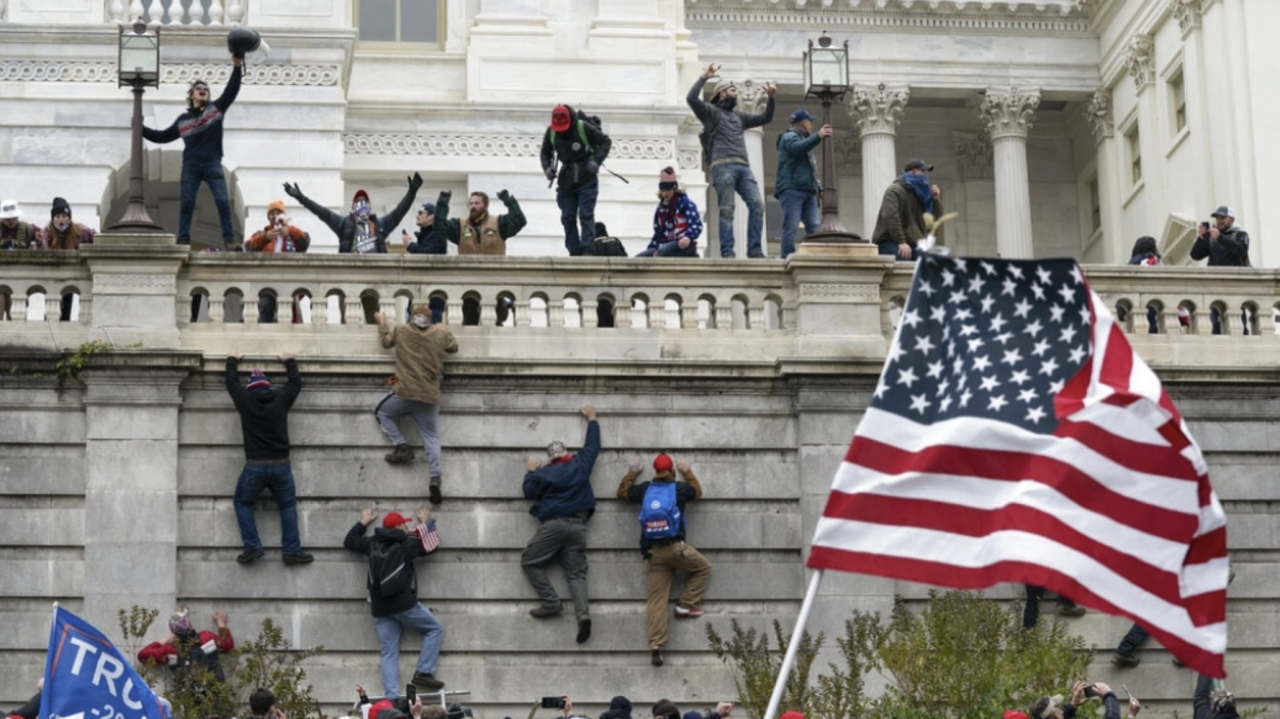
A third mechanism is delegitimising legal outcomes when they conflict with the leader’s narrative, which turns elections from binding decisions into optional suggestions. The post-2020 US episode remains relevant here because Trump’s pressure campaign against electoral officials and the broader refusal to accept judicial and administrative determinations established a template: law is authoritative only when it ratifies the preferred outcome. A well-documented example is Trump’s call pressuring Georgia’s secretary of state to reverse the result; courts and officials rejected claims of widespread fraud, but the political strategy treated lawful adjudication as subordinate to political insistence. Representative democracy can survive intense partisanship; it struggles to survive when political actors condition obedience on winning.
The Japan comparison is most illuminating when you focus on the paradox: the 1920s expanded participation while simultaneously tightening coercive legality. Universal male suffrage increased the electorate, yet the Peace Preservation regime and policing capacity meant that some political possibilities were increasingly criminalised or surveilled. The combination of more ‘voice’ on paper, less freedom in practice, helps explain how systems can look democratic while drifting toward authoritarian governance styles. In US terms, elections can remain competitive while rule of law norms degrade through selective investigations, pressure on institutional independence, and the treatment of legal limits as obstacles rather than boundaries.
None of this proves that the United States is ‘becoming’ Nazi Germany or imperial Japan; analogies are often abused when they skip scale, context, and institutional differences. The analytical claim is narrower and more defensible, the historical pattern is that representative democracy’s economic and political benefits depend on rule of law constraints. When leaders normalise using legal and investigative power to discipline independent institutions, or when they treat courts and procedures as legitimate only when favourable, they replicate a recognisable pathway of democratic erosion. The lesson from Japan’s interwar trajectory is precisely that you don’t need to cancel elections to break democracy; you can keep the machinery of representation while bending the law into an instrument of executive will, and the system will appear constitutional right up until it no longer behaves that way.
Writing on law, history, politics and economics.