
Can International Law Truly Hold War Criminals Accountable in Modern Conflicts?
By Aiyla Iqbal
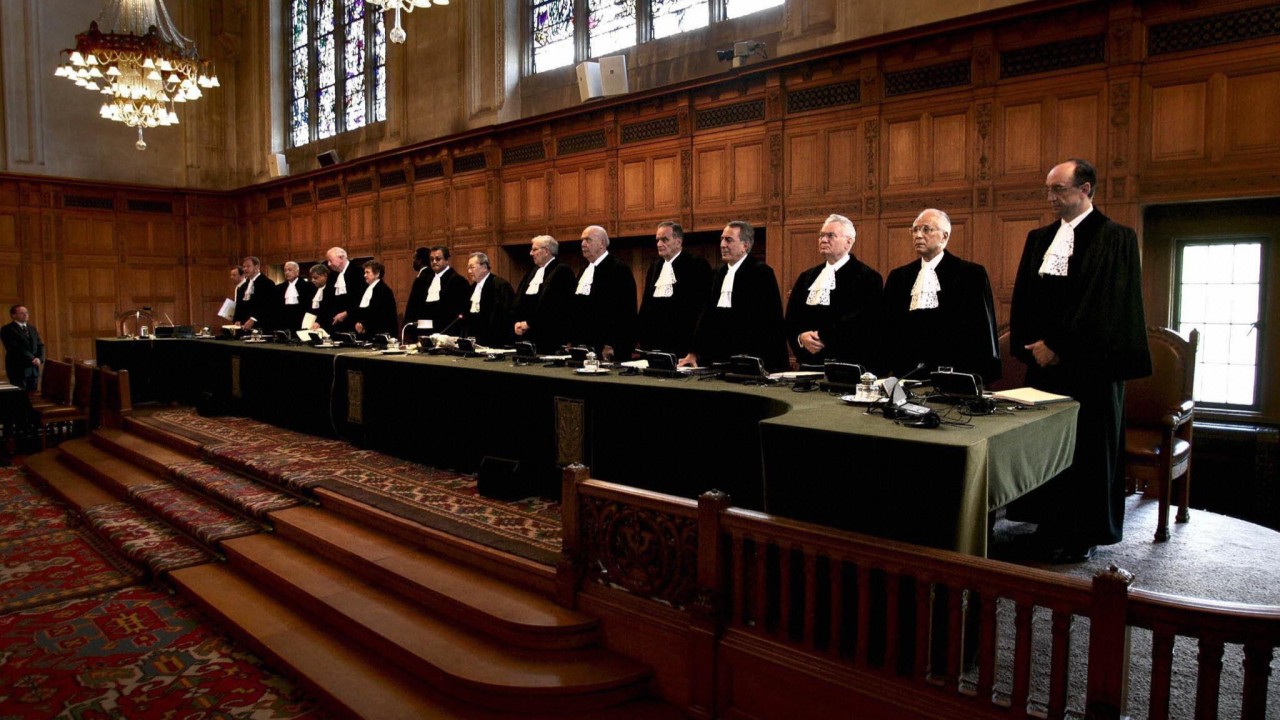
Modern warfare is increasingly scrutinised through the lens of international law. Images of civilian suffering, allegations of unlawful attacks, and accusations of war crimes circulate rapidly across global media. In response, international legal institutions are often expected to investigate and prosecute in order to deliver justice. Yet many observers question whether international law can genuinely hold powerful actors accountable. The main question therefore remains: to what extent can international law effectively prosecute war crimes in modern conflicts?
International humanitarian law seeks to regulate armed conflict by protecting civilians and limiting the means and methods of warfare. The legal foundations of these protections lie primarily in the Geneva Conventions, which establish rules regarding the treatment of civilians, prisoners of war, and wounded combatants. Violations of these rules (including targeting civilians, torture, and hostage-taking) may constitute war crimes. In addition, widespread or systematic attacks against civilian populations can qualify as crimes against humanity, one of the gravest offences under international law.
The primary institution responsible for prosecuting such crimes is the International Criminal Court (ICC), established under the Rome Statute of the International Criminal Court in 2002. The ICC was designed to prosecute individuals responsible for genocide, war crimes, and crimes against humanity when national courts are unwilling or unable to do so. Importantly, the court prosecutes individuals rather than states, meaning that political leaders and other officials may be held personally responsible for violations of international law.
In theory, this system represents a significant development in global accountability. Historically, political and military leaders were rarely prosecuted for actions committed during war, as sovereignty largely shielded them from external legal scrutiny. A major turning point occurred after World War II with the establishment of the Nuremberg Trials, where senior figures of Nazi Germany were prosecuted for crimes against peace, war crimes, and crimes against humanity. These trials established the groundbreaking legal principle that individuals (including heads of state and senior political leaders) could be held personally held accountable for violations of international law. Decades later, this principle was further reinforced when Slobodan Milošević became the first sitting head of state indicted by an international tribunal (the International Criminal Tribunal for the former Yugoslavia in 1999). The later creation of permanent institutions such as the International Criminal Court reflected an effort to institutionalise this system of accountability. Nevertheless, despite these legal developments, the practical effectiveness of international criminal justice remains widely debated.
One of the most significant limitations of international criminal justice is its reliance on state cooperation. Unlike domestic courts, international tribunals do not possess their own police forces. The ICC can issue arrest warrants, but it cannot independently apprehend suspects. Instead, it relies on national governments to arrest and transfer individuals to The Hague for trial. When states refuse to cooperate, the court has little ability to enforce its decisions. As a result, several individuals indicted for war crimes have remained at large for extended periods of time. This tension reflects a broader structural feature of international law: unlike domestic legal systems, it operates without a centralised authority capable of enforcing its decisions. As a result, international law relies heavily on the willingness of states to comply with legal norms.
Jurisdiction also presents major challenges. The authority of the ICC is limited to countries that have accepted its jurisdiction through ratifying the Rome Statute or through referrals from the United Nations Security Council. However, several major global powers have not ratified the treaty, which restricts the court’s ability to pursue cases involving those states or their allies. This uneven participation has led critics to argue that international criminal justice can appear selective, sometimes focusing more heavily on weaker states than on powerful geopolitical actors.
Recent conflicts have further highlighted the complexities of enforcing international law. Allegations of war crimes have emerged in multiple ongoing conflicts, including the Russian invasion of Ukraine and the Israel-Palestine conflict. Investigations have been launched by international institutions, yet legal accountability often unfolds slowly and is deeply entangled with other political considerations. Collecting evidence in active war zones and navigating questions of jurisdiction contribute to lengthy investigative processes that may take years before reaching trial.
Allegations concerning senior political leaders in the Israel-Palestine conflict illustrate the broader structural challenges facing international law. Whether or not specific legal allegations ultimately result in prosecution depends on complex questions of jurisdiction and legal procedure. The absence of immediate legal consequences does not necessarily mean investigations are impossible, however, it does reveal the limitations of international enforcement mechanisms.
These limitations raise a fundamental question: does international law meaningfully constrain the conduct of war, or does it merely establish norms that are difficult to enforce against powerful actors? Critics argue that the system struggles to deliver consistent accountability because political realities frequently outweigh legal principles. When arrests depend on the cooperation of states that may have strategic alliances or political interests at stake, enforcement becomes uncertain.
Nevertheless, international law continues to play an important role in shaping global expectations about acceptable conduct during war. Even when prosecutions are slow or incomplete, international investigations contribute to documenting atrocities, preserving evidence, as well as establishing legal standards. Over time these processes can influence diplomatic pressure and historical accountability. Past cases, including the prosecution of political leaders following the Yugoslav conflicts, demonstrate that international justice, although delayed, can eventually reach senior officials.
Ultimately, the effectiveness of international law in prosecuting war crimes remains limited by the realities of international politics. While legal frameworks (such as the Geneva Conventions and the ICC) provide mechanisms for accountability, their success depends heavily on state cooperation and geopolitical conditions. International law therefore operates within a complex intersection of law and power. It may not always deliver immediate justice, but it continues to serve as a critical framework for defining and challenging violations of human rights during armed conflict.
Thus, while international law cannot fully prevent war crimes nor guarantee swift accountability, it nevertheless plays an important role as a potential deterrent against war crimes. The existence of legal frameworks such as international humanitarian law establishes clear norms regarding acceptable conduct during conflict, signalling that such actions are subject to international scrutiny and possible prosecution. Although enforcement mechanisms remain inconsistent, these legal standards contribute to shaping state behaviour by increasing the political, legal, and reputational costs associated with committing war crimes. For this deterrent effect to be strengthened, greater efforts should be made to encourage and, where possible, compel state compliance with international legal obligations. This may involve increasing cooperation between states in investigations and prosecutions and maintaining sustained diplomatic and public pressure on those who violate established international law. Ultimately, even when imperfectly enforced, international law remains a crucial framework for promoting accountability and discouraging violations of humanitarian principles in armed conflict.
Writing on law, history, politics and economics.